



By Miriam Humbe
The National Park Service has called for stronger collaboration with Environmental Journalists to expose illegal activities in Nigeria’s forests and protected areas, as insecurity, illegal mining and wildlife trafficking continue to pose challenges to conservation efforts.
Samuel Adeyinka, the Secretary of EMCAN disclosed this in a statement signed on Tuesday.
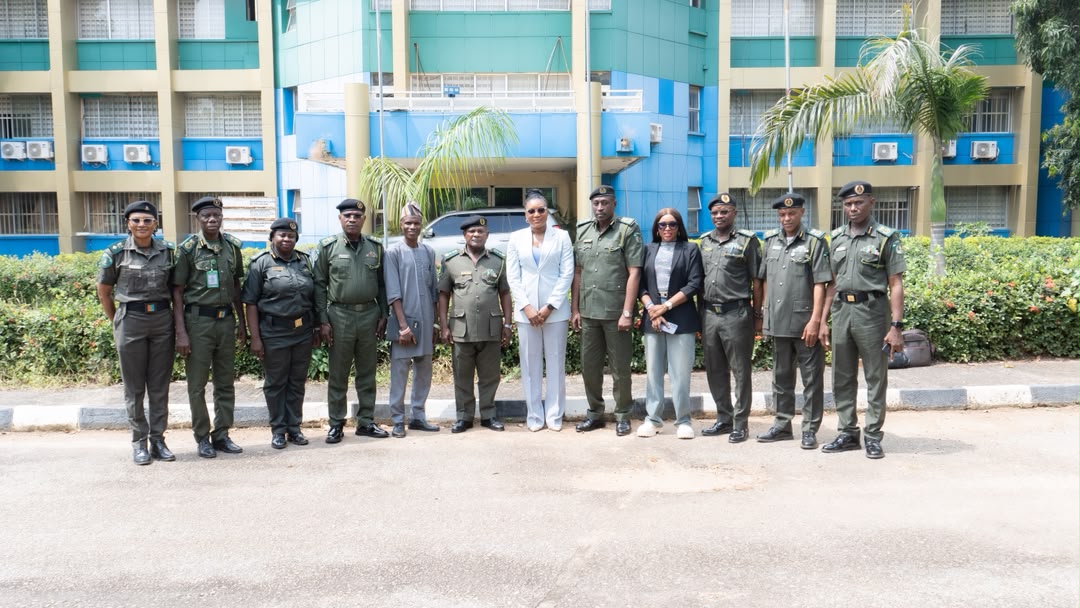
The Conservator-General of the National Park Service, Mr. Ibrahim Goni, made the call when members of the Environmental Media Correspondents Association of Nigeria (EMCAN) paid a courtesy visit to the service’s headquarters in Abuja.
Mr. Goni described environmental journalists as strategic partners in the campaign to protect Nigeria’s natural resources and Wildlife stressing that increased media attention would help bring conservation challenges to the forefront of public discourse and encourage action by relevant authorities.
He said many of the problems confronting national parks and forest reserves remained underreported, making media engagement essential to improving public awareness and strengthening advocacy.
“We are comfortable to have you as partners. We are also comfortable to collaborate with you so that our issues can be given widespread visibility,” Mr Goni said.
The Conservator-General of National Park Service identified illegal mining, illegal hunting, timber exploitation, banditry and kidnapping as major threats to the effective management of national parks and other protected areas.
According to CG, the interconnected nature of Nigeria’s forests makes it difficult to isolate national parks from criminal activities taking place in surrounding forest reserves.
He explained that even when security operations succeed in containing criminal elements within a national park, adjoining forests could provide alternative hideouts, thereby complicating efforts to maintain security.
Goni commended the Nigerian Armed Forces and other security agencies for their efforts to tackle insecurity and protect vulnerable areas,
Illegal Mining Operations Disrupt Conservation.
The Conservator-General disclosed that the service had collaborated with the Nigerian Army to close two illegal mining sites in sectors of Gashaka-Gumti National Park in Taraba and Adamawa states.
He said the operation resulted in the closure of extensive mining pits and the dislodgement of more than 4,000 miners.
Mr. Goni warned that removing illegal miners from protected areas could generate resistance, highlighting the need for government interventions that provide alternative livelihoods for affected communities.
He also raised concerns over mining activities in Oyo State, noting that the service was working with the Ministry of Solid Minerals to address the situation.
He further cited the arrest of about 17 miners in Rivers State as part of efforts to curb illegal mining.
The Conservator-General stressed that effective enforcement must be accompanied by inter-agency cooperation and practical measures to address the economic factors driving illegal exploitation of natural resources.
Nigeria’s Role in Wildlife Trafficking:
Mr. Goni also called attention of Journalists to illegal wildlife trafficking, explaining that Nigeria is frequently identified in trafficking networks because smugglers use the country as a transit route to seaports.
He said traffickers move wildlife specimens from neighbouring countries, including Chad, Niger and Cameroon, through Nigeria for onward transportation.
To address the problem, he disclosed that the Nigeria Customs Service, National Park Service, National Environmental Standards and Regulations Enforcement Agency (NESREA) and Nigeria Police Force had formed an inter-agency committee to combat illegal wildlife trafficking.
The Conservator General said the committee has carried out raids leading to the seizure of live animals, carcasses and other wildlife specimens.
He emphasised that sustained collaboration among law enforcement agencies and the media was necessary to expose trafficking networks and improve accountability.
Forest Loss Raises Environmental Concerns, Beyond security and wildlife crime.
Mr. Goni expressed concern over the rate of forest destruction in Nigeria, saying the country was losing close to 300 hectares of forest reserve daily.
Mr Goni also identified illegal logging and hunting among the longstanding threats to forest conservation, warning that continued forest loss could accelerate desertification and worsen environmental degradation.
He said the expansion of Nigeria’s national park system was partly intended to restore degraded vegetation and strengthen the country’s response to climate change.
According to him, Nigeria now has 17 national parks, 13 of which are operational, compared with seven before the establishment of 10 additional parks during the administration of the late former President Muhammadu Buhari.
He explained that the expansion was intended to support vegetation regeneration in areas previously designated as forest or game reserves and contribute to the country’s climate commitments.
Media Engagement to Strengthen Environmental Advocacy:
Goni urged EMCAN members to use their platforms to highlight issues affecting forests, wildlife and protected areas, noting that increased visibility could help mobilise public support and encourage stronger institutional responses.
The CG also called for greater public awareness of environmental pollution, flooding, erosion and other ecological challenges confronting the country.
The Conservator-General said the Federal Ministry of Environment had introduced flood-warning equipment in several parts of Nigeria to alert communities to impending floods and enable residents to move to safer locations.
He further appealed to environmental journalists to support public education on Ebola prevention and the relationship between wildlife and the transmission of certain infectious diseases.
Mr. Goni said the service was willing to work with the media to improve public understanding of conservation and promote responsible interaction with wildlife.
National Parks pledges continuous Training for EMCAN:
Mr. Goni also pledged to consider issues relating to journalists’ welfare, professional training and participation in conferences within the service’s budgetary framework.
The visit, he said, offered an opportunity to build a lasting partnership through which environmental challenges could receive greater public attention and conservation efforts could benefit from stronger media advocacy.
EMCAN expresses readiness to work with NPS:
Responding, the EMCAN Chairman, Joycelyn Ellakeche Adah said the association was committed to bridging the communication gap between environmental agencies including the National Park Service and the media.
She explained that the association’s new leadership, elected about two months ago, had identified inadequate engagement between environmental agencies and journalists as one of the major challenges affecting effective reporting of the sector.
According to Adah, the association decided to engage relevant agencies to introduce its leadership, establish working relationships and ensure that journalists covering environmental issues have access to information about their activities.
“As journalists, our job is to report on this sector. In every parastatal, there is an environment correspondent, and the job of that correspondent is to report on the sector,” she said.
The EMCAN chairman noted that the association had over 35 members, but only three or four media organisations regularly covered activities of the National Park Service, leaving many environmental correspondents without adequate access to information about the agency.
The EMCAN Chairman said the situation limited the visibility of the service’s activities and underscored the need for a more inclusive media engagement strategy.
Adah said that the association was ready to partner with the service to publicise its conservation initiatives and educate Nigerians about the institution responsible for managing the country’s national parks and protecting wildlife.
She observed that many Nigerians were not sufficiently aware of the responsibilities of the National Park Service, stressing that improved media coverage would help address the knowledge gap and highlight the agency’s contributions to environmental protection.
The meeting ended with resolutions by the National Park Service and Environmental Correspondent Association of Nigeria, EMCAN to enhance mutual cooperation.
