



By Miriam Humbe
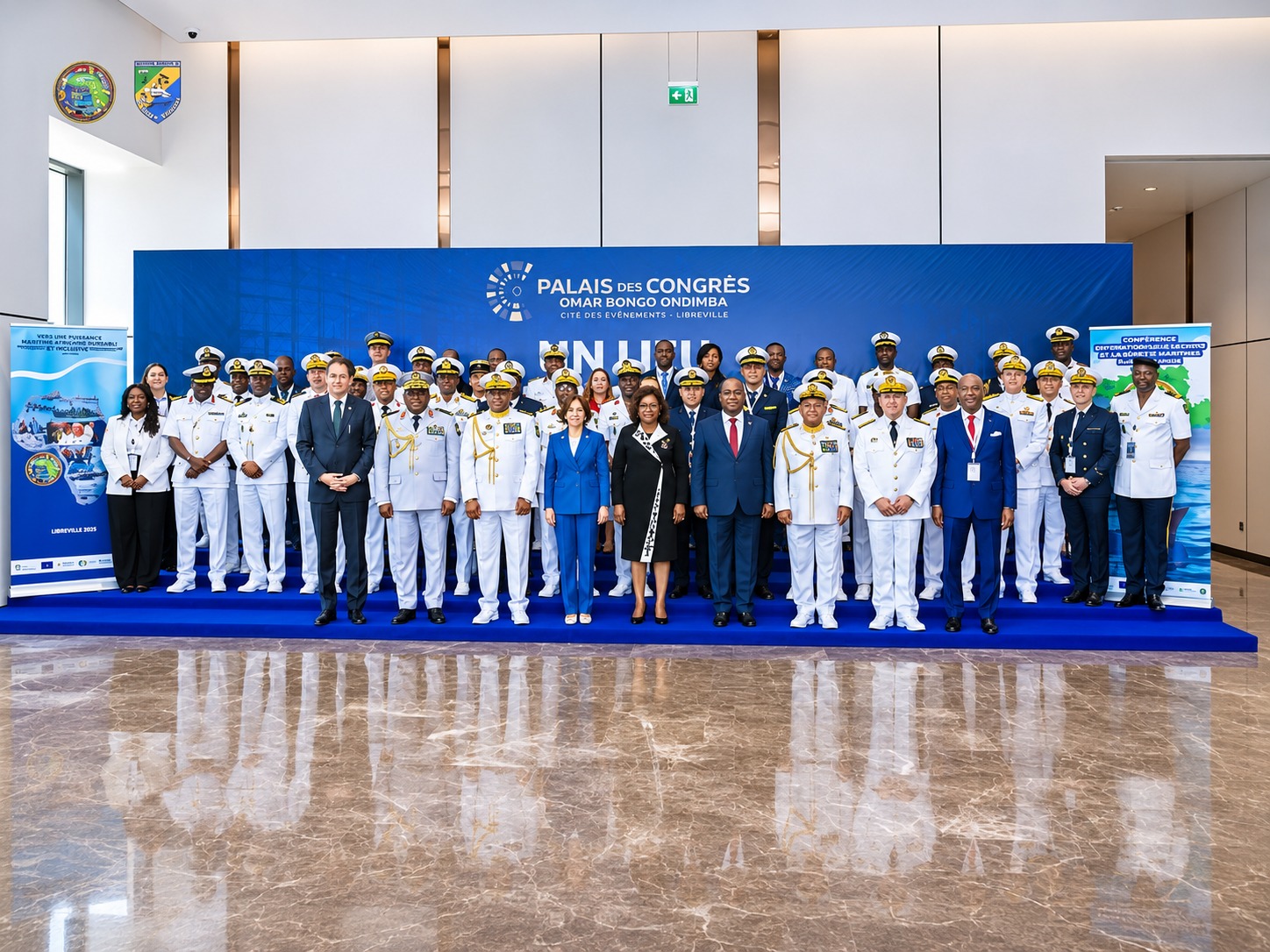
The Chief of the Naval Staff (CNS), Vice Admiral Idi Abbas AM, has called for stronger regional maritime security cooperation through enhanced partnerships, integrated naval capabilities and coordinated operational responses to common threats in the Gulf of Guinea.
He made the call while speaking at the 2-day 10th Symposium of Heads of Navies and Coast Guards in the Gulf of Guinea, held in Libreville, Gabon, from 18 to 19 November 2026.
Navy Captain Abiodun Folorunsho, the
Director of Naval Information disclosed this in a statement signed on Saturday.
Speaking on the theme, “Towards an Integrated Regional Naval Force: Which Capabilities Should Be Pooled?”, Vice Admiral Abbas advocated a shift from regional commitments to sustained collective action, identifying maritime surveillance and intelligence sharing, combined patrols, pooled naval and air assets, as well as shared logistics and operational sustainment as critical pillars of effective regional maritime security cooperation.
Central to his submission was the Combined Maritime Task Force (CMTF), flagged off on 1 June 2026 by the President and Commander-in-Chief of the Armed Forces of the Federal Republic of Nigeria, His Excellency, Asiwaju Bola Ahmed Tinubu.
The CNS highlighted the initiative as a practical framework for translating regional cooperation into coordinated maritime operations, reflecting the growing resolve of African navies to develop African-led solutions to shared security challenges.
Demonstrating the Nigerian Navy’s commitment to regional maritime security, Vice Admiral Abbas outlined assets earmarked to support the CMTF, including a helicopter-capable Offshore Patrol Vessel, one helicopter, two fast interceptors and maritime domain awareness support through the Falcon Eye System, alongside other strategic capabilities intended to enhance the Task Force’s operational effectiveness.
To accelerate the transition from commitment to action, the CNS proposed the development of a time-bound operational plan within six months by participating countries.
The proposed roadmap would define asset contributions, deployment schedules, intelligence-sharing arrangements and shared logistics support, thereby strengthening operational coordination, accountability and collective readiness.
Vice Admiral Abbas further emphasised that differences in national capabilities, sustainable funding and operational coordination must be addressed through shared responsibility and sustained political and military commitment.
He maintained that the true measure of regional cooperation would lie not merely in the existence of collaborative frameworks, but in the ability of participating navies to deploy their collective capabilities effectively against common maritime threats.
The CNS’ intervention reaffirmed the Nigerian Navy’s commitment to fostering a more cohesive, responsive and operationally integrated maritime security architecture in the Gulf of Guinea.
It further underscored his strategic thrust to deepen partnerships, promote shared operational responsibility and strengthen unity of effort among African navies.
Through sustained collaboration and collective action, participating nations can transform regional security cooperation into enduring operational effectiveness, safeguard vital maritime trade routes and create a secure environment for sustainable economic growth and shared prosperity across the Gulf of Guinea.
