



By Miriam Humbe
Chief of the Naval Staff (CNS), Vice Admiral Idi Abbas, has called for deeper application of emerging technologies in Nigerian Navy operations.
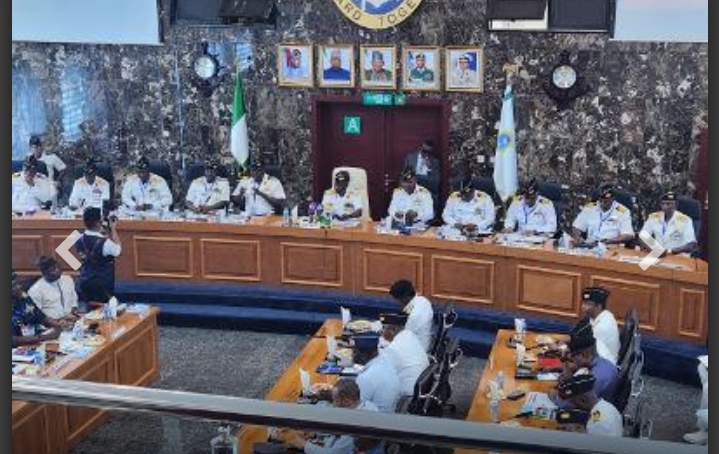
CNS Abbas made the call on Thursday while delivering the keynote address at the Nigerian Navy Research and Development Seminar 2026, themed: “Deepening the Application of Emerging Technologies for Operational Effectiveness.”
The Nigerian Navy, according to CNA Abbas, is planning to establish a research institute and research and development cells across its commands to develop indigenous technologies, reduce operational costs and strengthen its combat capabilities
The two day seminar features presentations by invited experts and interactive discussions on the application of emerging technologies, followed by presentations on the research and development activities of Naval Dockyard Limited, Naval Shipyard Limited and the Nigerian Navy Institute of Technology, Sapele.
He said it was important to translate research and development into practical solutions that enhance operational effectiveness, strengthen maritime security and reduce dependence on foreign technology.
The CNS said the Nigeria’s maritime security environment was becoming increasingly complex, with criminal networks exploiting the advancement in technology to evade detection and threaten Critical National Assets.
He said that effective responses required timely intelligence, accurate surveillance and the ability to deploy naval assets precisely where they are needed.
According to him, the objective is to achieve better operational results with available resources and not merely to acquire more technology.
The Naval Chief further underscored the relevance of technological innovation to counter terrorism and counter-insurgency operations, particularly as Nigerian Navy personnel, including Marines and Special Forces, increasingly participate in joint operations.
He called for stronger partnerships with universities, research institutions and indigenous industries, urging participants to identify capability gaps, recommend viable research collaborations and develop practical pathways for deploying locally developed technologies.
He also cited indigenous shipbuilding and maintenance as evidence of the Navy’s growing capacity to develop and sustain operational capabilities locally.
CNA Abbas also expressed appreciation to President Bola Ahmed Tinubu for his continued support and commended the Naval Transformation and Innovation Branch for organising the seminar.
The Chief of Transformation and Innovation (CNTI), Naval Headquarters, Rear Admiral Chijioke Onyemaobi, said the seminar aligned with the CNS’s vision which is harnessing emerging technologies, intensifying research and development, and promoting indigenous solutions to strengthen naval operational capabilities.
He thanked Vice Admiral Abbas for approving the seminar and for personally attending despite his very busy schedules.
Rear Admiral Onyemaobi described the CNA’s presence as a demonstration of the Navy’s commitment to innovation and self reliance.
According to Onyemaobi, emerging technologies, including unmanned systems, artificial intelligence, advanced sensors and additive manufacturing, are reshaping naval warfare, fleet maintenance and sustainment.
He however warned that the rising cost of imported platforms and spare parts, alongside lengthy supply lead times, makes the development of domestic technological capacity increasingly necessary for operational readiness.
“A navy that depends entirely on others for its technology cannot fully control its own readiness,” he said.
Research and development, according to him, provides the link between emerging technologies and the Navy’s operational requirements, offering a pathway from technological dependence to self reliance.
He urged participants to openly exchange knowledge and professional experience, so that the seminar would produce practical, sustainable recommendations capable of addressing the Navy’s immediate and long-term operational needs.
The seminar sessions are expected to encourage collaboration, identify promising indigenous innovations and strengthen the connection between research institutions and operational units.
