



By Francis Atume, Makurdi
The Benue State Police Command has concluded plans to establish Gender Units in all police divisions across the 23 Local Government Areas, LGAs of the state.
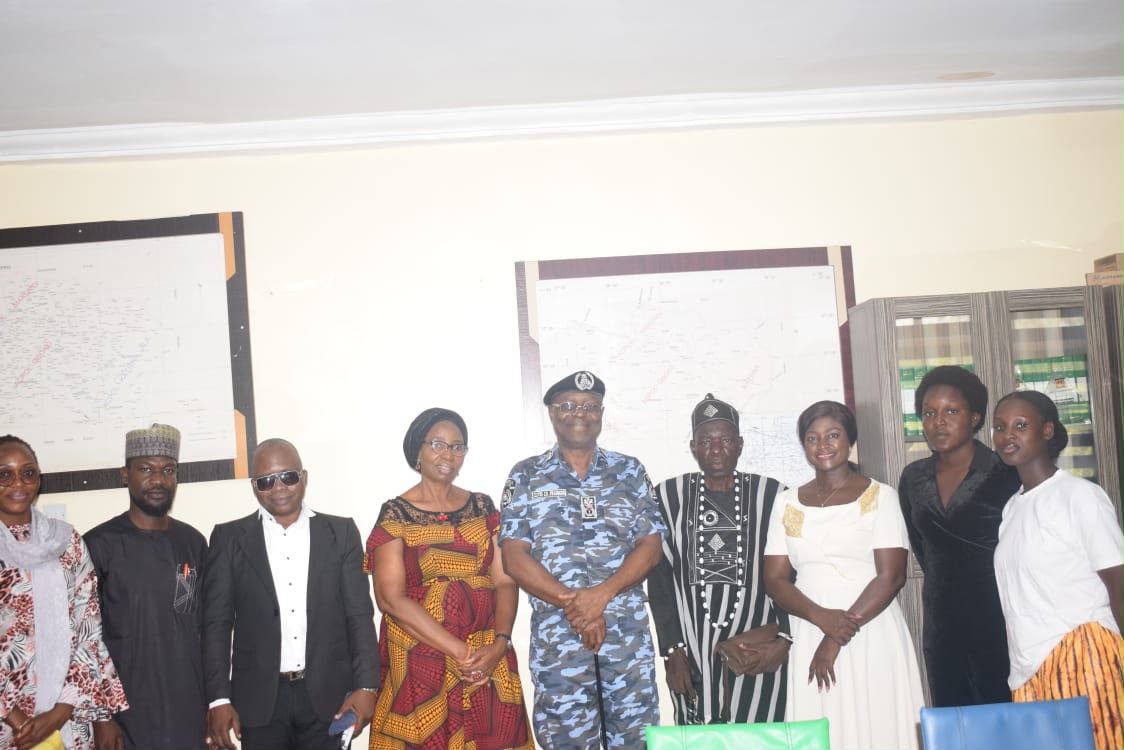
The Commissioner of Police, CP Cletus Nwadiogbu, disclosed this at the Command Headquarters in Makurdi while receiving a delegation of stakeholders championing the fight against Gender-Based Violence,GBV.
The delegation comprised representatives of the State Ministry of Women Affairs and Social Welfare, the Ministry of Justice, traditional rulers, the Sexual Assault Referral Centre,SARC, the media, and Adolescent Girls and Young Women, AGYW, volunteers, led by the Concerned Women International Development Initiative,CWIDI.
Nwadiogbu said the decision to decentralise the Gender Unit became necessary to reduce overdependence on the unit at the Command Headquarters.
He explained that relying solely on the Gender Unit at the headquarters makes it difficult to handle sensitive cases, such as rape, which require immediate and prompt responses to ensure that survivors access justice.
“When officers gather information on such cases and sleep over them, a lot of things happen,” he said.
“We have decided to decentralise the Gender Unit. We are equally intending to appoint women to be in charge of the Gender offices so that survivors, who are mostly women, can open up during investigations,” Nwadiogbu said.
He added that he had already issued directives for Gender offices to be established at the divisional level.
The CP said the Command has a functional Gender Unit but lamented that lack of operational logistics, such as patrol vehicles, was hindering its effective operations but expressed optimism that, with the available resources, no unit, including the Gender Unit, would be left behind.
He assured the delegation that the Command would continue to seek support from donors to address key operational needs, adding that the Gender Unit would also be prioritised.
Nwadiogbu expressed willingness to collaborate with CWIDI, the Ministry of Women Affairs and other relevant stakeholders in building the capacity of police personnel and addressing child abandonment and rape cases, which he described as major challenges associated with GBV.
He noted that many survivors of GBV, particularly rape, find it difficult to speak out, possibly due to naivety, traditional beliefs and the fear that they may not get married if people become aware that they have been raped, advising CWIDI and other stakeholders to intensify public enlightenment campaigns to encourage survivors to overcome stigma and speak out.
In her presentation, the Executive Director of CWIDI and leader of the delegation, Mrs Becky Gbihi, said the advocacy visit was aimed at strengthening the operational capacity of the Police Gender Unit to ensure an effective response to GBV.
She noted that GBV remains a major protection and human rights concern affecting women, girls and other vulnerable groups, adding that the Police Gender Unit plays a critical role in providing protection, conducting investigations and facilitating access to justice for survivors.
Gbihi, however, observed that operational challenges, including inadequate logistics, limited mobility and the need for continuous capacity development, affect the effectiveness of the unit.
She listed the advocacy priorities to include the provision of logistics and essential working tools; regular training for police officers on survivor-centred approaches, case documentation and referral mechanisms; and stronger coordination among the Police, Ministries of Women Affairs and Justice, SARCs and civil society organisations.
She also appealed to the Police Command to address the operational needs of the unit, strengthen the technical capacity of officers, improve referral pathways and designate focal persons to ensure sustained engagement.
According to her, strengthening the Police Gender Unit is essential to improving access to justice and protection for survivors of Gender-Based Violence in Benue State.
