


By Miriam Humbe
The Nigeria Customs Service (NCS) has engaged six federal government agencies to strengthen inter-agency collaboration in tackling cross-border illicit financial flows, money laundering, corruption, drug trafficking, terrorism financing, and other related offences.
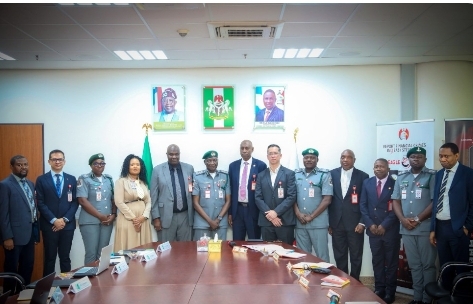
The three-day visit, held from 27 to 29 October 2026, was led by the Assistant Comptroller-General in charge of Headquarters, Muhammad Shuaibu. It focused on deepening strategic cooperation and intelligence sharing among the agencies to combat financial crimes and other illicit activities.
The agencies include the Economic and Financial Crimes Commission (EFCC), the National Drug Law Enforcement Agency (NDLEA), the Nigeria Police Force (NPF), the Nigerian Financial Intelligence Unit (NFIU), the Nigeria Immigration Service (NIS), and the National Counter-Terrorism Centre under the Office of the National Security Adviser (ONSA).
Speaking during the engagements, Shuaibu expressed that the initiative was aimed at enhancing inter-agency coordination in addressing threats to Nigeria’s economy and national security.
“The sole objective of this mission is to effectively detect and disrupt cross-border illicit financial flows. The measures include field visits to selected border stations to assess practical Customs control measures and engage with relevant agencies.” Shuaibu Said.
In his remarks, the Chief Executive Officer of the NFIU, represented by the Chief Operating Officer, Intelligence Security Service Sector, Muhammed-Mustapha, commended the Nigeria Customs Service for its efforts in combating smuggling and reinforcing border security.
He also noted the longstanding relationship between the two institutions. “When NFIU was created, NCS was the first to collaborate with us. No particular agency understands things better than how Customs does globally,” Mustapha said.
Meanwhile, the World Customs Organisation (WCO) Mentoring Team, led by Shahiduzzaman Sarkar, interacted with the agencies on approaches to addressing Anti-Money Laundering (AML) and Countering the Financing of Terrorism (CFT).
The team also called for stronger collaboration with the NCS to ensure the success of the initiative.
During the engagements, participants identified communication gaps, bureaucracy and database privacy concerns, among others, as impediments to effective inter-agency collaboration.
The discussions also explored measures to address these challenges and strengthen institutional synergy.
The engagements also featured the presentation of NCS awards and WCO certificates to the agencies, demonstrating the Service’s commitment to enhance collaboration in tackling threats to Nigeria’s economy and national security.
