



By Abdulkadir Ibrahim
The recent cases of collapsed buildings recorded in parts of Nigeria have once again highlighted the urgent need for stronger preventive measures, improved safety culture, and effective coordination among stakeholders responsible for protecting lives and property.
Each collapse represents not only a structural failure but also a reminder of the consequences of weak compliance, inadequate monitoring, and delayed action.
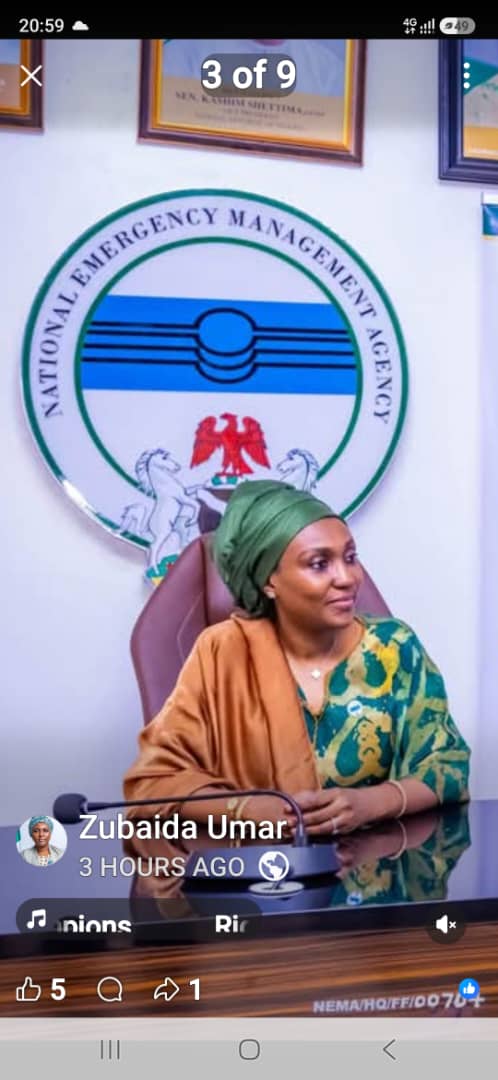
In the face of these incidents, the role of the National Emergency Management Agency (NEMA) has remained critical. Under the leadership of the Director General, Mrs. Zubaida Umar, the agency has continued to demonstrate that disaster management goes beyond emergency rescue operations.
It involves preparedness, coordination, stakeholder engagement, public sensitization, and the development of systems that reduce the impact of disasters before they occur.
Following reports of building collapse incidents, NEMA has continued to activate its emergency response mechanisms, working with relevant agencies and first responders to support search and rescue operations, coordinate interventions, assess affected locations, and provide necessary humanitarian assistance to victims.
In recent building collapse responses, the agency under Mrs. Zubaida Umar has mobilized relevant stakeholders to ensure that emergency operations are conducted effectively and that affected persons receive support.
However, the leadership approach of Mrs. Zubaida Umar has consistently emphasized that the best disaster response is one that prevents disasters from happening in the first place.
This philosophy has strengthened NEMA’s focus on disaster risk reduction, where prevention, early warning, preparedness, and collaboration remain central to building a safer society.
Building collapse incidents require more than emergency intervention. They demand the involvement of regulatory authorities, state governments, local authorities, professional bodies in the built environment, developers, community leaders, and citizens.
Recognizing this, NEMA has continued to promote stakeholder engagement as a major strategy for reducing disaster risks.
Through collaboration with relevant institutions, NEMA continues to advocate for improved compliance with building standards, responsible construction practices, proper monitoring, and stronger safety enforcement.
The Agency’s position remains clear: disaster risk reduction is a collective responsibility, and no single organization can prevent disasters without the commitment of all stakeholders.
Public sensitization has also remained a major part of NEMA’s disaster risk reduction efforts.
The agency continues to create awareness on the importance of reporting unsafe structures, paying attention to early warning signs, and avoiding practices that expose communities to unnecessary risks.
A well-informed public is a critical partner in disaster prevention because early reporting and community vigilance can save lives.
The recent building collapses should therefore serve as a national clarion call. They should remind Nigerians that safety must come before convenience, and that development must always be guided by responsibility and accountability.
Every contractor, developer, professional, regulator, and citizen has a role to play in ensuring that buildings are safe for occupation.
The leadership of Mrs. Zubaida Umar at NEMA represents a continued push towards a more proactive disaster management system where response is strengthened by prevention, preparedness, and partnership.
Her administration has continued to emphasize coordination, humanitarian support, and disaster risk reduction as essential pillars for protecting Nigerians.
As Nigeria responds to the challenge of building collapses, the focus must not only remain on rescue after tragedy strikes but also on addressing the root causes that make such incidents possible.
The ultimate measure of success in disaster management is not only how quickly we respond when disaster occurs, but how effectively we work together to prevent avoidable loss of lives.
The message from recent events is clear: safer buildings require stronger regulations, informed citizens, responsible professionals, and sustained collaboration.
Through continued efforts by NEMA and its partners, Nigeria can build a culture of resilience where prevention becomes the foundation of disaster management.
Abdulkadir Ibrahim,
NEMA Abuja Operations Office,
Press Unit
13.09.2026
