



By Miriam Humbe
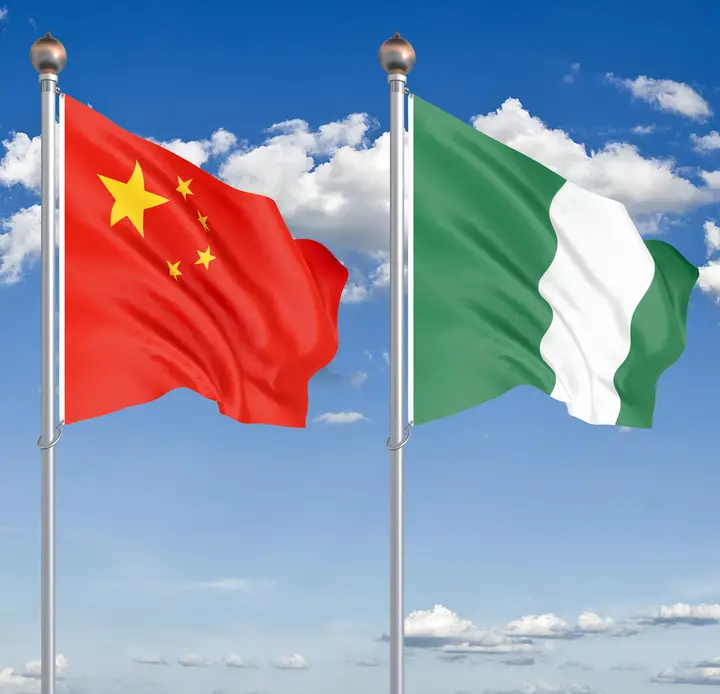
Despite being Nigeria’s second-largest trading partner in Africa, and with massive economic investments, China may have arguably maintained complicit silence in the face of daunting security challenges in the country.
Reason is not far-fetched. China has a policy of Non-Interference. As emphasized by strategic analysis, Beijing avoids deep domestic security involvements or large-scale military financing in Nigeria, preferring to focus on economic diplomacy and infrastructure.
Beijing’s non-interference policy is a core foreign policy tenet which states that China will not meddle in the internal political, economic, or social affairs of other sovereign nations.
Rooted in the 1950s Five Principles of Peaceful Coexistence, the Non-Interference policy prioritizes State sovereignty, mutual respect, and unconditional economic cooperation.
However, the strict neutrality demanded of Chinese state-owned enterprises leaves infrastructure projects and workers exposed to local insurgencies, banditry, and kidnapping without direct recourse from Beijing.
In contrast, the United States’ security assistance to Nigeria is in the total of roughly $650 million since 2017.
This is alongside over $1.8 billion in commercial Foreign Military Sales, supplemented by a $413 million regional counter-insurgency allocation under the 2026 defense budget.
Here’s a breakdown:
The $650 million+ direct U.S. security assistance and cooperative programs was provided to Nigeria since 2017 to fight violent extremism, secure borders, and build military capacity.
The $1.8 billion amounted to Cumulative Foreign Military Sales (FMS) authorized for high-end defense equipment and hardware acquisitions.
$413.046 million: Approved under the U.S. National Defense Authorization Act (NDAA) for 2026 operations and maintenance managed via U.S. Africa Command (AFRICOM), covering counter-insurgency operations across Nigeria and wider West African partners.
$346 million: Major specific defense equipment and arms approval for precision munitions and aircraft components finalized for Nigeria’s air operations.
What Its Meant To Achieve:
Counter-Terrorism: Funding and equipment deployment targeting Boko Haram and ISWAP networks in the North-East.
Border and Air Security: Joint initiatives securing land frontiers and aviation infrastructure against illicit trafficking and extremist movement.
Training and Intelligence: Programs spanning International Military Education and Training (IMET) and technical intelligence sharing for regional forces.
How Much Is China’s Investment In Nigeria’s Security?:
China has not specifically disclosed a stand alone multi-billion-dollar financial total dedicated strictly to Nigeria’s security sector. Instead, the Chinese support for Nigerian security has historically remained minor and incidental compared to its huge commercial, infrastructure, and economic investments.
China-Nigeria’s Security And Military Cooperation:
Military Aid: Historical disclosures from Chinese defense attachés noted modest military assistance, such as roughly ₦5.5 billion in military aid provided over a two-year window leading up to 2019.
Equipment and Training: Low-level cooperation involves sales or provisions of tactical defense hardware, intelligence-sharing frameworks to counter specific financial or transnational crimes, and training programs for Nigerian security personnel.
China’s Overall Investments:
Total Chinese Foreign Direct Investment and cumulative infrastructure commitments (such as rail, energy, and construction tracked via initiatives like the Green Finance and Development Centre) span tens of billions of dollars, but these target economic production and public works rather than military or national defence budgets.
Why China Should Invest In Nigeria’s Security:
Protecting Economic Assets: Although the Nigerian government and the Armed Forces of Nigeria have been doing a lot so far, observers believe its important that China invest in Nigeria’s security to protect its multi-billion dollar economic assets, secure critical supply chains like oil and minerals, and safeguard its nationals working across the region.
Infrastructure Safety: China has funded and built major railways, power grids, and ports. Security investments protect these physical assets from attacks.
Commercial Risk Reduction: Violent conflict and kidnapping threaten the operations of hundreds of Chinese businesses and workers active in the country.
Securing Resource Supply:
Energy and Minerals: Nigeria is a vital non-Middle East source for crude oil and solid minerals that feed Chinese manufacturing.
Trade Stability: Ensuring regional security stability keeps trade routes and free-trade zones productive.
Strengthening Strategic Ties:
Defence Cooperation: Upgrading military technology and intelligence sharing helps combat terrorism and aligns with the Nigeria-China comprehensive strategic partnership.
Regional Influence: A stable Nigeria supports China’s wider diplomatic and economic goals in West Africa and the Gulf of Guinea.
