


By Miriam Humbe
African media professionals are calling for deeper and more practical cooperation with their Chinese counterparts, as digital platforms and artificial intelligence reshape how stories are produced and shared.
At the 7th China-Africa Media Cooperation Forum in Beijing, African journalists say closer exchanges could help both sides better understand each other, as new technologies are creating fresh opportunities for African newsrooms.
Nigerian journalist Michael Onjewu believes media cooperation starts with something fundamental, helping audiences understand what is actually happening between China and Africa.
“The role of media is strategic in the sense that without proper media, there are negative stereotypes about countries. But with proper media cooperation, we can begin to tell the true stories about China-Africa relationship.”
Zimbabwean political commentator Derek Goto says AI is already making media production faster and less costly, while affordable Chinese AI models are making the technology increasingly accessible to African newsrooms.
“For Africa, DeepSeek, for example, you want to do your research, it’s free. So any newsroom can use it. You want to do scripting. So that accessibility in terms of pricing, I think it’s a real game changer, not just for Africa, for the world at large.”
Ugandan journalist Raziah Athman adds that greater use of AI also raises questions about credibility, governance and the future role of journalists.
“AI cannot take the human touch of journalism or of media. I don’t see a time when AI will ever do that. So AI is here to stay. It’s about remaining as human as possible, remaining relevant to our audiences.”
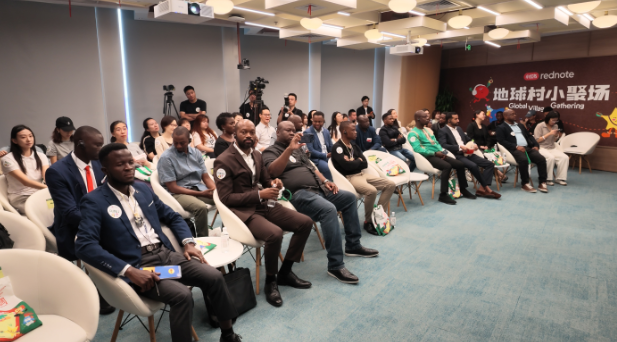
As part of the forum program, journalists also visited Rednote, a popular Chinese social media platform, where they saw firsthand how social media is allowing Chinese and African voices to reach audiences directly.
Athman says such platforms can open new channels not only for communication, but also for business and people-people exchanges.
“With the discovery and formulation of new platforms, like Rednote, I think the most important thing, especially for young people who hold the biggest market,. I think for them, social media will help with the direct access and relationship. And it works both ways, not just for a Chinese being able to access the market in Uganda, but all Africa. So many Africans are also looking for ways of getting into the Chinese market.”
The tools for telling China-Africa stories are evolving.
And as those tools become more accessible, the opportunity is growing for Chinese and African media to tell those stories more directly and in their own voices.
