



By David James
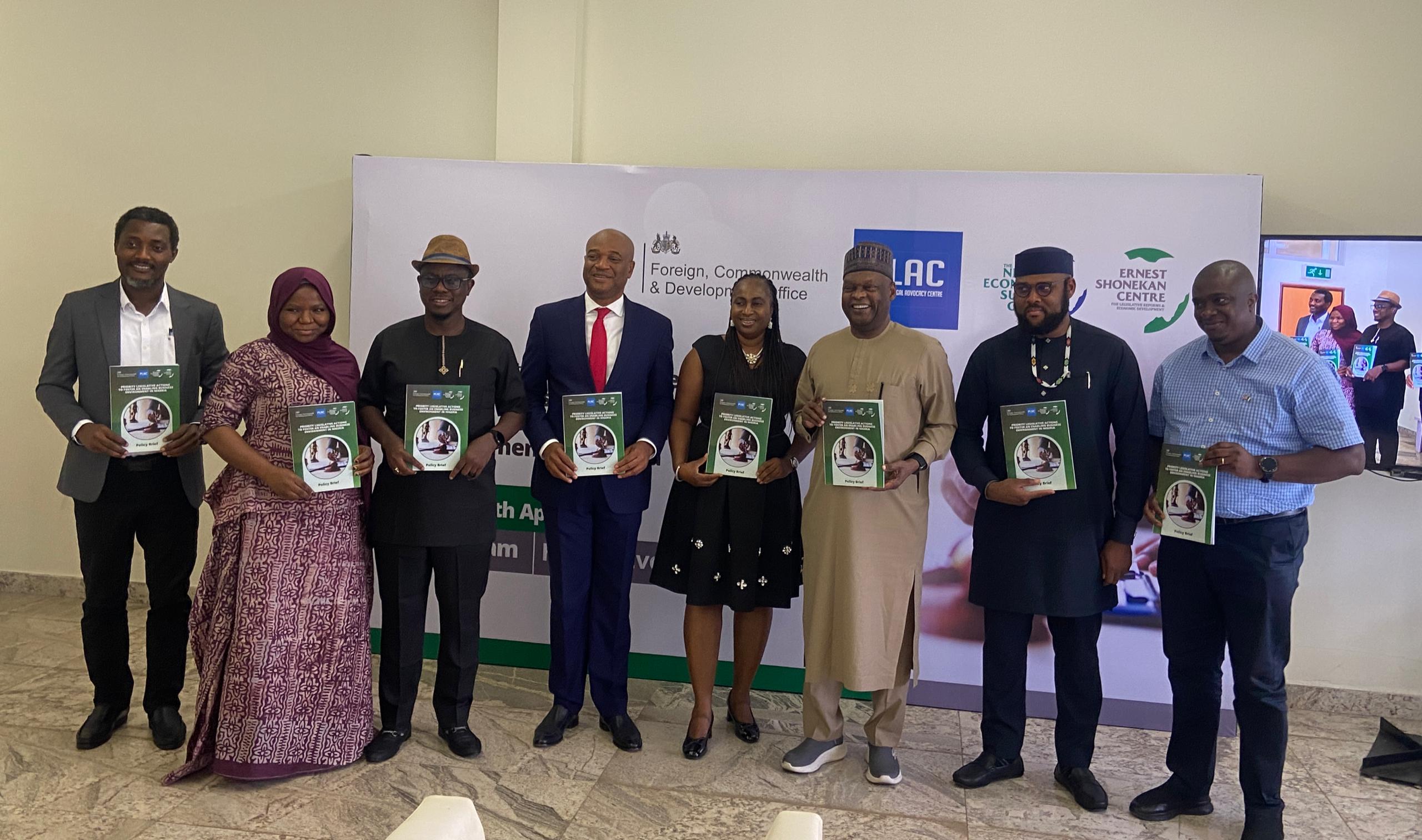
Stakeholders have called for urgent legislative and regulatory reforms to address structural gaps hindering Nigeria’s business environment, as a new baseline report on priority legislative actions was unveiled in Abuja.
The event was organised by Ernest Shonekan Centre of the Nigerian Economic Summit Group.
The research was conducted by the Ernest Shonekan Centre in partnership with the policy and legal advocacy Centre (PLAC) with funding from the FCDO
Speaking at the event, Mr Nnanna Ude, Board Member ESC, NESG said the report builds on years of engagement aimed at strengthening Nigeria’s regulatory framework through evidence-based policy making.
Ude said that past efforts, including collaborations with the National Assembly, led to critical reforms such as the amendment of the Companies and Allied Matters Act and the enactment of the Federal Competition and Consumer Protection Act.
“We realised that for the economy to succeed, businesses must thrive and for businesses to thrive, the regulatory environment must be conducive.
“One of the most effective ways to ensure policy consistency is through legislation, because policies anchored on law are more stable across administrations,” he said.
He added that the newly launched report provides a systematic approach to identifying regulatory gaps and translating them into practical, implementable recommendations within existing institutional frameworks.
Also speaking, Kyari Abba, Chairman of the Ernest Shonekan Centre for Legislative Reform and Economic Development, said Nigeria’s economic growth had slowed significantly over the past decade, with rising poverty levels despite ongoing reforms.
According to him, macroeconomic challenges such as inflation, exchange rate volatility and rising debt underscore the need for deeper structural reforms.
“Many of these challenges are rooted in gaps within our legal and regulatory framework, including conflicting laws, overlapping mandates and weak enforcement.
“When institutions are not clear about their responsibilities, it creates confusion for citizens and increases the cost of doing business,” he said.
Abba noted that improving transparency and stakeholder engagement in policymaking would enhance compliance and strengthen reform outcomes.
Dr Matthew Ayibakuro, Governance Adviser at the FCDO, described the report as a practical contribution to Nigeria’s economic reform agenda, emphasising the importance of clear and coherent laws in driving investment and growth.
“When laws and regulations are consistently applied, they reduce uncertainty, attract investment and enable businesses to thrive.
“But when they are fragmented or unclear, they increase costs and limit opportunities,” he said.
Ayibakuro added that the report provides lawmakers, regulators and stakeholders with evidence-based recommendations to guide legislative actions and improve coordination.
He stressed that sustained engagement between the legislature, executive and other stakeholders would be critical in translating reforms into tangible economic benefits.
In her remarks, Ms Omolara Akunyeye, Deputy Executive Director of the Policy and Legal Advocacy Centre(PLAC), said the organisation was pleased to support the initiative and looks forward to the implementation of the report’s recommendations.
“We are happy to have supported this process and we look forward to seeing how the recommendations will be implemented to strengthen Nigeria’s economic growth,” she said.
Presenting the report, Mr Oluwasola Omoju, Lead Consultant at the Centre for Legislative Reform and Economic Development, identified policy inconsistency, regulatory overlaps and weak enforcement as major barriers to investment.
He said these challenges often lead to high compliance costs, delayed decision-making and reduced investor confidence.
Omoju explained that the report’s recommendations were grouped into technical, process-based and legal framework-specific actions aimed at addressing structural inefficiencies.
“It is important to address regulatory overlaps and strengthen enforcement capacity, as well as improve transparency and inclusiveness in the legislative process.
“Making public hearings more accessible and ensuring stakeholder participation will enhance accountability and improve policy outcomes,” he said.
He added that continuous capacity building for legislative institutions and better coordination across government agencies were essential for effective reform implementation.
