



By Miriam Humbe
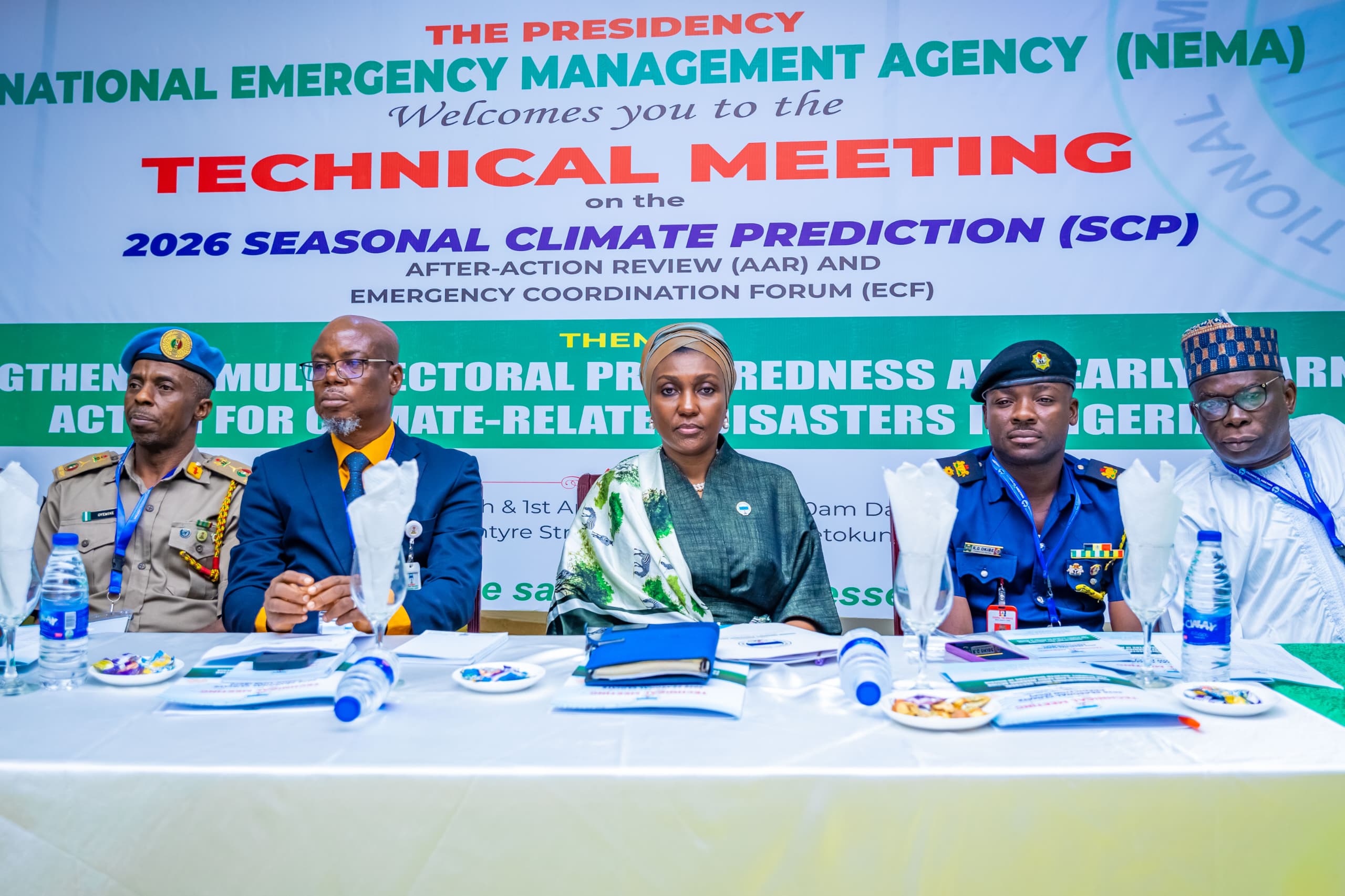
In a proactive and data-driven approach to flood and disaster management, the National Emergency Management Agency (NEMA) has convened a high-level Technical Meeting to analyse the 2026 Seasonal Climate Prediction (SCP) and develop risk mitigation and response strategies.
The meeting brought together key stakeholders from Federal Ministries, security agencies, humanitarian organisations, and development partners to enhance national preparedness for climate-related hazards, particularly flooding.
The Director-General of NEMA, Mrs. Zubaida Umar, emphasized the need for proactive, coordinated, and evidence-based actions in addressing the growing risks associated with climate variability.
She described the Seasonal Climate Prediction as a critical decision-making tool for guiding preparedness and early action across all levels of government.
According to the Director-General, the theme of the meeting—“Strengthening Multisectoral Preparedness and Early Action for Climate-Related Disasters in Nigeria”—highlights the importance of timely and coordinated responses to emerging risks.
She noted that recent experiences, particularly recurring flood events, have exposed gaps in coordination, preparedness, and early action, underscoring the need for improved collaboration among stakeholders.
Mrs. Zubaida Umar urged participants to critically examine the climate projections and translate them into concrete preparedness measures, stressing that disaster management must be proactive rather than reactive, with clear roles, timely planning, and strong inter-agency coordination.
The NEMA Director of Planning, Research and Forecasting, Dr. Godwin Tepikor, stated that the inclusion of the 2025 After Action Review (AAR) was deliberate, aimed at drawing lessons from previous emergency responses to strengthen future interventions.
Representatives of the Nigerian Meteorological Agency (NiMet) and the Nigeria Hydrological Services Agency (NIHSA) highlighted ongoing improvements in weather and flood forecasting systems, noting that the forthcoming 2026 Annual Flood Outlook will further support preparedness efforts nationwide.
Other stakeholders, including the Nigerian Red Cross Society, Defence Headquarters, and the Nigerian Security and Civil Defence Corps (NSCDC), reaffirmed their commitment to enhanced collaboration, early warning dissemination, and coordinated response mechanisms.
The meeting also featured the presentation of the 2025 After Action Review, which assessed previous disaster responses and identified key areas for improvement.
Overall, the engagement reinforced the importance of a multi-sectoral approach to disaster risk management, with strong emphasis on early warning, preparedness, and effective coordination to safeguard lives and livelihoods.
