



By Otunba Abdulfalil Abayomi Odunowo
Imagine a land teeming with nearly 18 million souls in Kano State alone, a vibrant northern powerhouse pulsing with potential. Yet, what do we truly have to show for it?
Just 58 industries scattered across this vast expanse, woefully inadequate for millions of able-bodied men and women desperate for honest work.
Hundreds of thousands of worship centers rise like monuments—magnificent, overflowing with fervent crowds, multiplying every month amid the dusty streets.
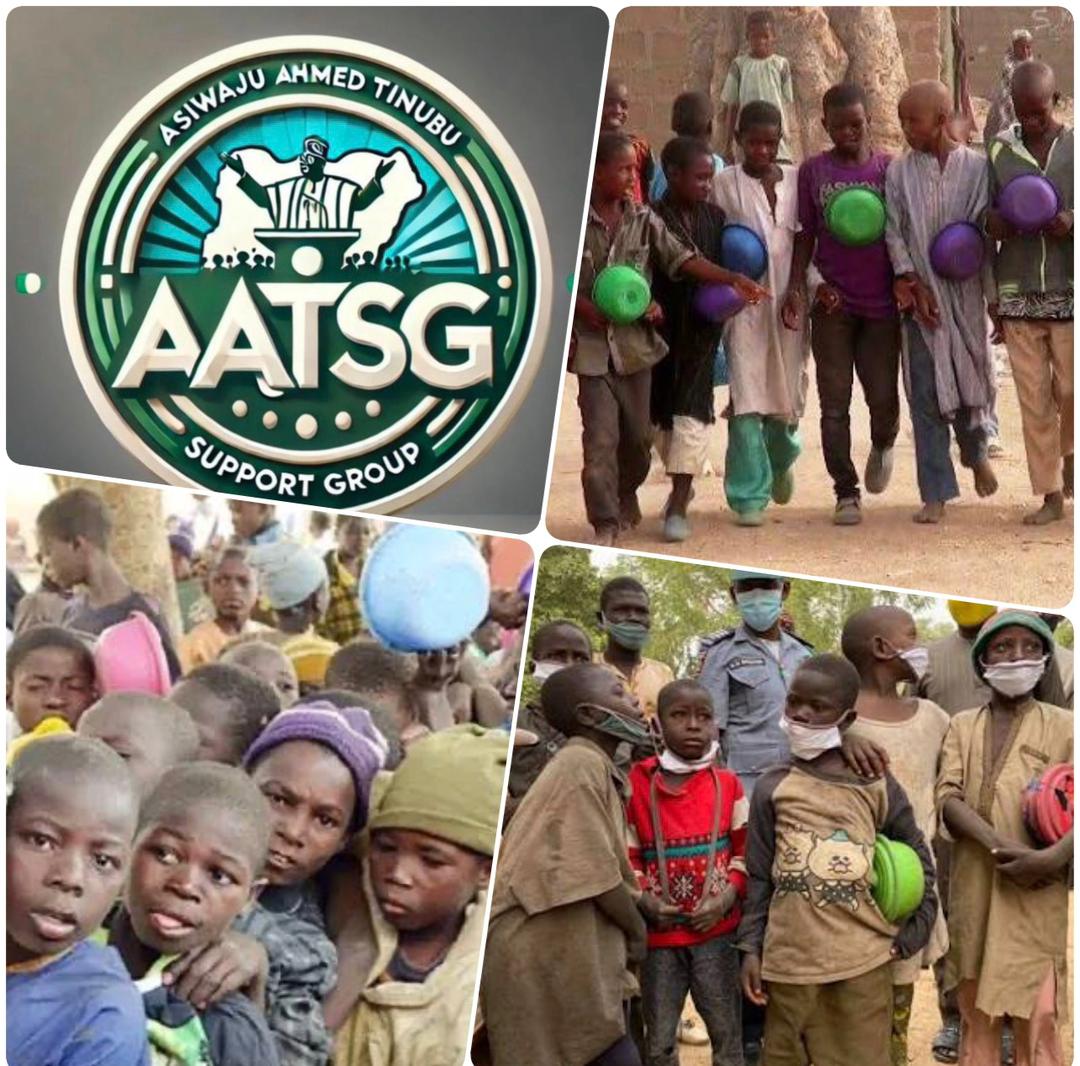
Millions of youths wander aimlessly: jobless, hopeless, their futures evaporating like morning dew under the relentless sun. Millions more children roam the streets like ghosts—hungry, uneducated, utterly directionless, their small hands clutching scraps of survival.
And hundreds of thousands of divorced and abandoned women battle daily just to feed their babies, their resilience a quiet testament to a system’s cruel neglect.
Pause. Truly pause and let this sink in.
This is no indictment of faith itself. Faith is holy; it has forged civilizations, inspired empires, and sustained communities through the darkest trials. From the ancient mosques of Timbuktu to the cathedrals of medieval Europe, spirituality has been the bedrock of human endurance.
But when faith becomes the singular offering of a society—when prayers eclipse action—it morphs from salvation into sedation. Today, millions in Kano and beyond pray fervently for miracles, divine interventions that never materialize, while the factories, schools, and farms that produce real, tangible miracles gather dust. This imbalance isn’t mere oversight; it’s a deliberate drift toward catastrophe.
This is no longer a “challenge” to be debated in air-conditioned chambers. It’s a ticking time bomb, with the fuse already burning brightly, its acrid smoke curling into the horizon.
A Deadly Imbalance No One Can Ignore
Picture Kano State: a population swelling to nearly 18 million as of the latest 2023 projections from Nigeria’s National Population Commission, rivaling entire nations like Chile or the Netherlands.
Yet, only a few dozen industries operate within its borders—textile mills wheezing on life support, agro-processors starved of power, and small-scale ventures crushed by infrastructure deficits.
Where do the fresh graduates from Bayero University or Kano University of Science and Technology find employment after four grueling years? Where do wide-eyed apprentices hone modern skills in automation, digital fabrication, or renewable energy?
Where do young women secure dignified work that allows them to feed their children without the shame of street vending? And crucially, where do bold innovators even dream of erecting factories that could export leather goods or process groundnuts for global markets?
Federal allocations from Abuja, though generous on paper—over ₦100 billion annually for Kano—cannot sustain 18 million dreams indefinitely.
They are a bandage on a gaping wound, funneled mostly into recurrent salaries for a bloated civil service that employs a fraction of the population. Civil servant paychecks, averaging ₦50,000 monthly for many, cannot shoulder an entire generation’s weight.
Trading imported goods and raw consumption might fill markets temporarily, but they forge no lasting wealth. An economy that fails to produce, manufacture, export, or innovate isn’t an economy at all—it’s a gilded waiting room for inevitable disaster, echoing the collapse of resource-dependent economies from 1970s Venezuela to post-oil Saudi Arabia’s early stumbles.
Not Just Kano: The North’s Silent Emergency
This deadly pattern doesn’t confine itself to Kano; it replays like a grim symphony across northern states from Sokoto to Borno. Too many children—Nigeria’s North accounts for over 60% of the nation’s under-15 population, per UNICEF data—and far too few factories to absorb them.
Too much dependence on Abuja’s oil money, which constitutes up to 80% of federal revenue sharing for many states, and too little investment in the minds and hands of their own people.
Governors tout white-elephant projects, but vocational training centers languish empty, tech hubs flicker without reliable electricity, and mechanized farms yield to traditional hoes amid climate shocks.
For now, the oil spigot still drips, masking the rot beneath. But demographers warn of a “youth bulge” exploding by 2030, with 70 million Nigerians aged 15-24, most in the North.
When federal revenues inevitably slow—due to depleting reserves, global energy transitions, or fiscal reforms—the streets won’t simmer; they’ll explode.
We’ve witnessed this before: the Arab Spring uprisings fueled by jobless youth in Tunisia and Egypt; youth-led riots in Sudan; even Nigeria’s own #EndSARS protests amplified by economic despair. History doesn’t lie—it screams warnings we ignore at our peril.
The Children Disappearing in Plain Sight
Every child you see hawking pure water sachets under the scorching midday sun or begging at chaotic traffic lights isn’t “just a child” enduring temporary hardship. That child embodies stolen promise: the doctor who will never be born to staff our overcrowded hospitals; the engineer who will never build resilient bridges or solar grids; the entrepreneur who will never create jobs in agro-tech startups; the teacher who will never educate the next generation in STEM or civic responsibility.
According to the World Bank, over 10 million Nigerian children are out of school, with northern states bearing the brunt—rates exceeding 70% in some areas. We’re not merely losing individual children to almajiri streets or child labor; we’re erasing an entire generation in real time.
No society on earth has survived such abandonment: ancient Rome fell partly from demographic decay; modern Yemen teeters on youth radicalization. Nigeria risks the same fate unless we pivot now.
A Direct Call to Northern Leaders
Governors, senators, House members, emirs, religious leaders, business captains: the hour demands reckoning. Stop measuring progress by the number of mosques and churches constructed, their minarets piercing the sky as symbols of piety over prosperity.
Measure it instead by factories humming with activity, tech hubs buzzing with coders and creators, mechanized farms harvesting bumper yields, vocational centers churning out skilled welders and coders, and empowered women leading cooperatives in shea butter processing or tailoring empires.
You weren’t elected, appointed, or entrusted to manage poverty’s sprawl—you were chosen to eradicate it. True leadership thrives on discomfort: it forces uncomfortable truths, like auditing ghost workers and reallocating funds from opulent pilgrimages to industrial parks.
It drives change even when politically perilous, courting backlash from vested interests. Above all, true leadership saves the next generation, dismantling the status quo that dooms them to cycles of despair.
Restructure for Survival—Not Slogans
Restructuring Nigeria’s federation is no longer optional rhetoric peddled at conferences; it’s non-negotiable for the nation’s survival as a stable entity in 20 years.
It must deliver real fiscal autonomy, compelling states to own their revenues and responsibilities rather than begging bowls from the center; aggressive internal revenue generation through digitized taxes and property levies; ruthless industrialization policies that zone lands for factories and offer tax holidays for pioneers; emergency investments in education and skills, from free tech bootcamps to polytechnic revamps; deliberate economic empowerment for women via microfinance and market linkages; structured child welfare systems with mandatory schooling and anti-trafficking enforcement; and massive support for SMEs and manufacturing through power subsidies and export incentives.
Anything less—vague devolution promises or incremental tweaks—is merely managing decline, postponing the inevitable implosion.
The Clock Is Screaming
If even half these stark facts hold true—and data from the National Bureau of Statistics, World Bank, and UNICEF confirm they do—every serious leader in Nigeria should forfeit sleep to strategize. This crisis transcends North versus South divides or religion versus religion tensions. It’s raw survival pitted against collapse.
A nation cannot stand tall when entire regions are economically hollowed out, their human capital bleeding away. A country cannot rise when millions of its children are written off as collateral damage.
Restructure now for productivity that employs millions. Restructure now for dignity that restores pride. Restructure now for our children, before the streets enforce it in blood and fire.
History will not forgive another decade of dithering delays. The next generation will not forgive our culpable silence.
The time for polite conversation is over. The era of urgent, courageous action is NOW.
Otunba (Dr) Abdulfalil Abayomi Odunowo is the National Chairman, AATSG (Asiwaju Ahmed Tinubu Support Group)
